What makes a conference great?
 Sacha Judd
Article Summary
Great conferences are designed with intention, not assembled out of habit. The best ones get the basics right before attendees even arrive (a clear website, an honest code of conduct, accessible registration), commit to a single-track program, so a curator's judgement does the work instead of outsourcing that decision to attendees, and protect long breaks because the "hallway track" is where the real value happens. Small signals of care (good signage, available coffee, accessible name tags, options for dietary needs and childcare) add up to attendees feeling looked after. The piece ends with a call to support independent and community conferences, many of which have folded since the pandemic due to thin margins and late ticket sales.
Introduction
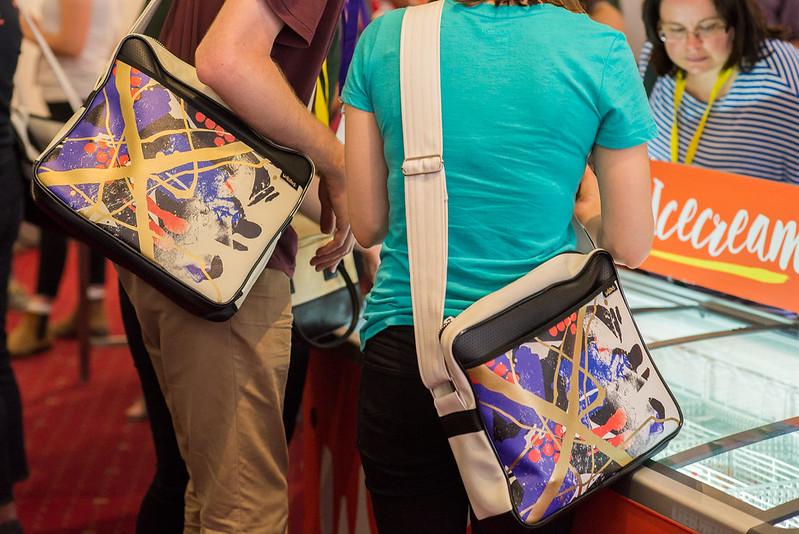
The very first conference I ever spent my own money to go to was Webstock. I was a lawyer at the time, and couldn’t think of a way to justify attending an event that was so outside my professional wheelhouse that I took annual leave and flew to Wellington on my own dime. I did it because the lineup that year was staggeringly good: Obama’s design director Scott Thomas, the poet Rives, Digg’s founder Kevin Rose, and startup legend Eric Ries. Attending that conference rewired something in my brain, because every last detail – from the swag to the lanyards to the food to the people – was thought through with such care.
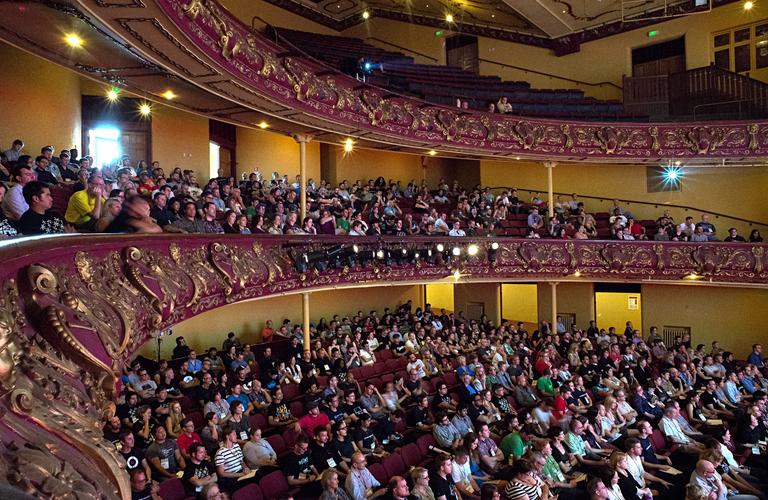
I've attended conferences as a lawyer, a tech person, a speaker, a sponsor, and — my favourite — as a civilian with a lanyard and nowhere in particular to be. I've sat in convention centres the size of aircraft hangars and in tiny theatres where the speaker could see everyone's face. And so I can now tell you with total confidence the things that make a conference great.
It starts before it starts
A conference website needs more than a “just trust us” – I want to be wowed by a diverse line up of awesome speakers, and I want to know what they’re going to talk about. Let me know the details of the venue, whether it’s accessible or not, and if there’s going to be food! Make your code of conduct easy to find, and make sure it’s something you mean, not something from a template. The registration process should feel personal. Let me put the name I’d like to be called, don’t ask for information you don’t need, and give me a box to tell you things you might not have thought of including in your form. And think about all the ways you can make it possible for people to attend who wouldn’t otherwise get to come (student or unwaged tickets, a lottery for some comp tickets, a cheaper or free meet-up the night before).
The talks are an occasion
Obviously a conference needs a great programme. But the talks I still think about, years later were almost never in my lane. The ones that stuck with me were about typography when I came for business, or about grief when I came for design. They were the talks I would never have chosen from a menu if I’d had to.
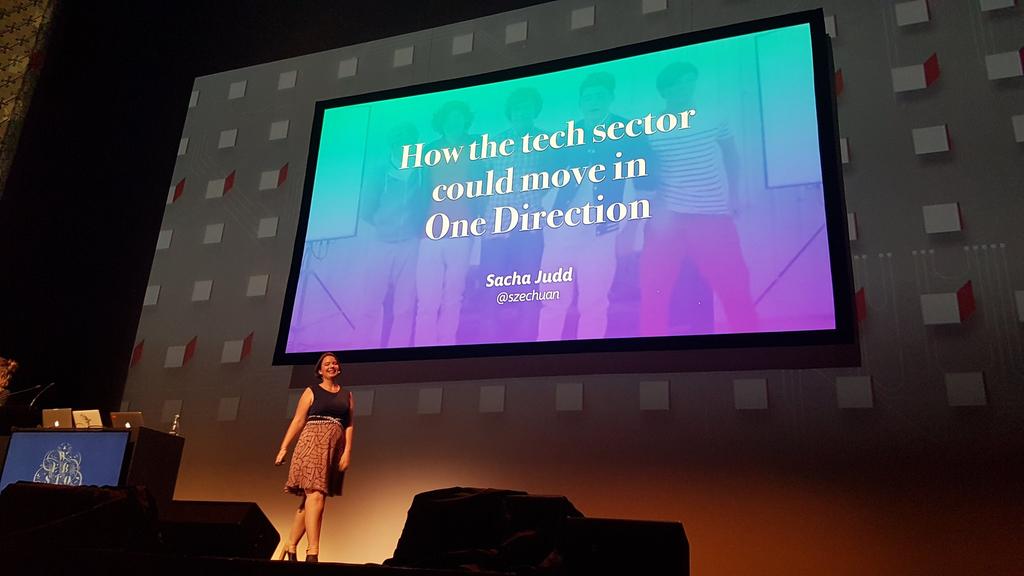
Which is why I will die on the hill of the single-track conference. A single track shows editorial commitment. A curator, a human being with taste (or a whole team of them!) decided “everyone in this room needs to hear this”, and that decision is the actual product you're buying when you sign up to come. We all sit in the same space together, we all have the same shared reference points at the coffee break, and nobody spends the day doing logistics maths about how to get from room to room.
The multi-track experience is horrible. Standing in a corridor at 10:55 choosing between three sessions, knowing that whichever one you pick, you'll spend the first ten minutes wondering about the other two. The mega-conference outsources the curation to you, the person least equipped to do it, because you don't know yet which talk is going to change your life. That's the curator's whole job – and great conferences are the ones that do it well.
The hallway track
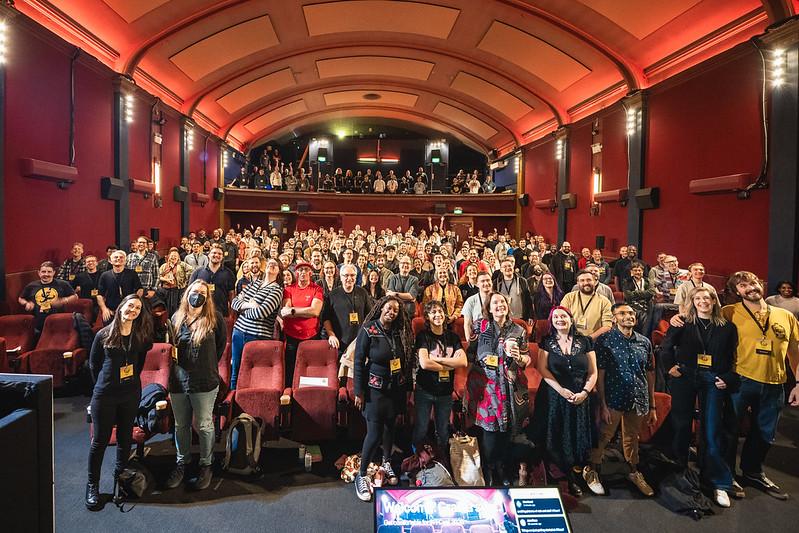
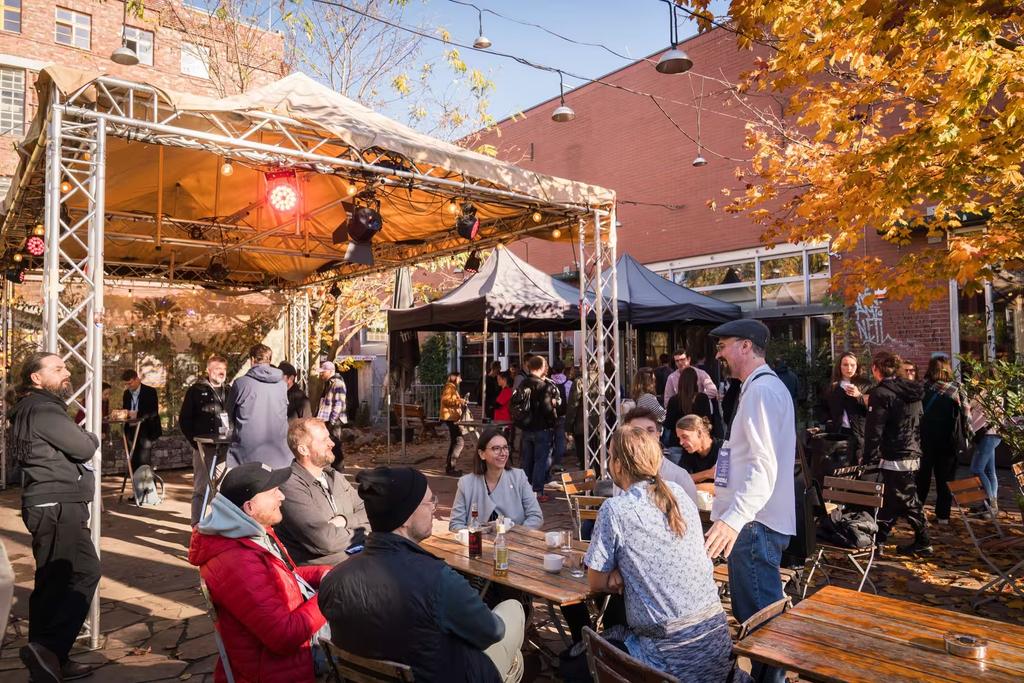
It’s a cliché to say the real value at a conference happens between sessions, but it is true that the community piece of any event is what gives it heart. You can tell immediately whether an event has been designed for this or scheduled it out of existence. Long, generous breaks mean we want you to talk to each other. Back-to-back sessions with a 25-minute lunch make everyone feel exhausted.
Food matters here too, and it’s honestly not about your catering budget — food you can eat standing up while talking, in a space that invites lingering, does more for the hallway track than any official networking function. We are going to find each other in corridors and stairwells and the good coffee cart down the street. The great conferences treat that impulse as a design brief. The rest treat it as time that could have been another panel.
Speaking of panels
A brief (affectionate) list of things that make a conference not-great, all of which are usually sins of laziness rather than malice: the sponsor keynote that’s really just a sales pitch for their product; the panel cobbled together from people who haven’t prepared anything meaningful to say. "Networking drinks" in a venue with the acoustics of a public swimming pool. The wifi collapsing the moment the first speaker says "if you go to this url”.
These things aren’t fatal. But each one tells you something about whether the organisers were thinking about your experience when they were making their plans.
People can tell when you care
Attendees can feel when we’re being looked after, and we feel it through a hundred small signals: signage that means you never have to wonder where to go. Coffee that's available when you need it (always). A quiet room, a space for new parents, options for childcare. Dietary requirements handled without a fuss or a sad separate table. Name tags printed big enough to read without squinting at someone's chest.
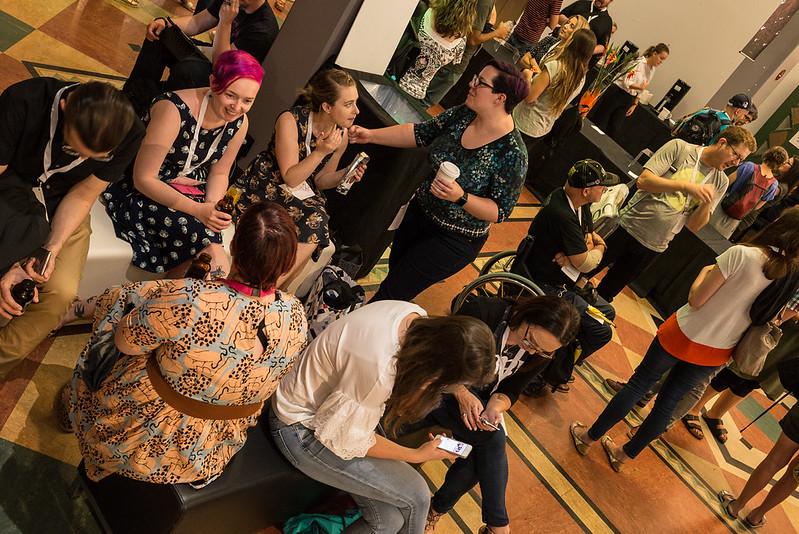
No single one of these things makes a conference great. Collectively, they're how an event says we thought about you before you arrived. People don't come to conferences for information. Information is free and infinite and at home with better snacks. People come to be in a room with their community.
Keep the lights on
Here's the part where I get earnest, because I've watched too many of these events wink out in our post-pandemic world. In Aotearoa we used to have a whole calendar of them — Webstock, Gather, KiwiFOO, Codemania — and one by one the lights have gone off, because sponsorship dried up, and nobody buys tickets in advance anymore, and running a conference is a heroic act of financial optimism by people who could earn more doing literally anything else.
What we lose when a conference dies is one of the few remaining places where a community gets to be in the same room together — to see each other in the real world, argue at coffee breaks, and remember that we exist outside a feed. A great conference is a temporary city, built for a couple of days, where you all speak a similar language, and you can collide and collaborate and come away the better for it.
So: buy the ticket to the little conference. Buy it early, while the organiser is lying awake doing the maths. The talks will be great. Being there will be even better.
FAQs
What makes a conference single-track, and why does it matter?
A single-track conference has one programme everyone attends together, rather than multiple concurrent sessions to choose between. It's a sign of genuine curation: organisers decide which talks matter most for the room, rather than leaving attendees to guess which of several simultaneous sessions will be worthwhile.
What is the "hallway track"?
It's the informal value that happens between sessions, in corridors, over coffee, during breaks, where attendees connect with each other. This is often what people remember most, and it requires deliberate design (longer breaks, good food, inviting spaces) rather than happening automatically.
What are common signs of a poorly run conference?
The post lists several: sponsor keynotes that are disguised sales pitches, panels with unprepared speakers, networking events in loud venues, and unreliable WiFi. These are described as failures of attention rather than intent.
What small details signal that a conference is well organised?
Clear signage, consistently available coffee, quiet rooms, childcare options, dietary needs handled smoothly, and large, readable name tags. None of these alone make a conference great, but together they show attendees were considered in advance.
Why are smaller, independent conferences struggling?
The post points to thinning sponsorship, later ticket purchasing habits, and the financial risk organisers take on to run an event at all, especially post-pandemic. Several long-running New Zealand conferences are cited as having shut down for these reasons.
What's can you do to help conferences alive?
Buy tickets to smaller conferences, and buy them early. The author frames this as direct support for organisers who are taking on financial risk to create spaces for community connection that are increasingly rare.

Sacha Judd
As a well-known expert on the power of fandoms, Sacha has spent the last decade speaking about the intersection of the tech sector and fan communities at conferences around the world, and in-house at companies including Slack, Sky TV UK, Twilio and Twitter.
Sacha writes a weekly newsletter called What you love Matters, and is the co-founder of Lume Music.